
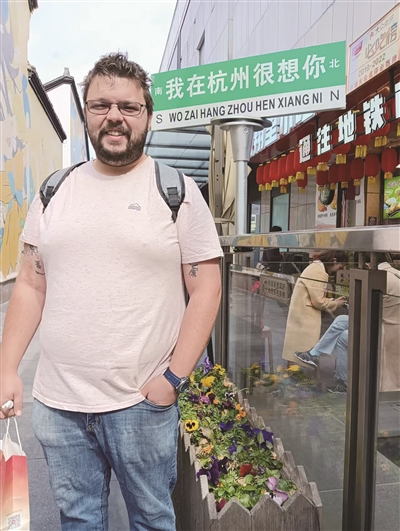
Photo provided to Hangzhoufeel
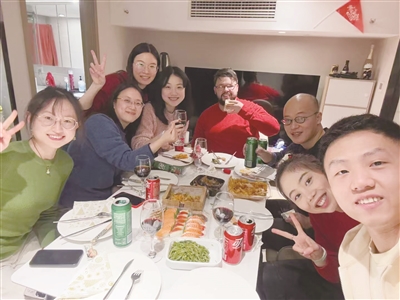
Christmas get-together with friends hosted by Henrico.
By Daria Fominykh
“You can study rules until you’re blue in the face. You can ace an exam, but that doesn’t mean you can speak the language. So I changed my teaching approach to this…”
That’s how Henrico Marks, an English teacher at New Oriental in Hangzhou, introduces his teaching philosophy--one that’s a far cry from traditional English classrooms.
Before we get to Henrico’s tips for mastering English, here’s a bit of background. Originally from Welkom, South Africa, Henrico taught both first and second language English in public and private high schools.
“For most South Africans, English is not their first language, even though many speak it to some degree. We have so many cultures and languages. In my city, for example, most people speak Sesotho, but you’ll also hear Zulu, Xhosa, Afrikaans--which is kind of like Dutch. We also have large Portuguese and Indian communities. So English is a second language for a lot of people.”
While teaching in public schools, Henrico noticed something: students weren’t thinking in English. Memorizing vocabulary, studying grammar rules, reading books, and passing tests didn’t necessarily help them speak.
So he started changing his methods--and focused on something more personal.
“I started turning lessons into stories--if that makes sense. We’d still learn grammar and vocabulary, but I’d add in personal anecdotes. It helps students remember things more easily and keeps them engaged.”
He gave one example: in a class activity about “lucky escapes”, Henrico shared a story about a motorcycle accident on his way to work. “By pure chance, someone showed up--a paramedic coming off a night shift. That was a very lucky escape.”
Hearing his story, many students realized they had experienced something similar. Just like that, they understood the phrase and how to use it. “That kind of anecdotal teaching is, I find, a much easier way to spark discussion and get people talking,” Henrico said.
Now based in Hangzhou, Henrico mainly teaches adults, focusing less on academic English and more on real-life communication.
“What I try to do is simple: I ask questions. I get their opinions. I ask them to share stories. If it’s a topic they’re comfortable with--something they know well--they speak much more freely.”
One particularly memorable case was Henrico’s first one-on-one class, with a PhD student from Tsinghua University preparing for a keynote speech in New York. Henrico admits he was nervous at first.
“She was polite and kind, but incredibly insecure about speaking English. At our first meeting, she avoided eye contact and spoke very little--often switching to Mandarin. But I noticed her vocabulary was strong. What she lacked was confidence.”
When they began talking about her major--urban planning--her speech became more fluid. So Henrico tailored their sessions around her research, city life, and even her favorite kind of coffee. Over the next eight weeks, she gradually relaxed and became more confident. When the time came, she delivered her speech in New York--and received high praise from English professors for her performance.
Henrico doesn’t credit himself for the transformation, but rather the safe, low-pressure environment they created. He believes many learners already have the knowledge--they just need space to let it grow.
His other key piece of advice? Be kind to yourself.
“Don’t be so strict. I’ve seen it again and again--when students stop worrying about every little mistake, they actually improve faster. Confidence makes all the difference. If you’re always being corrected and told you’re wrong, you’ll feel like a failure. But if you’re encouraged, you’ll want to keep going.”
Henrico’s open, positive approach to teaching aligns perfectly with the warmth he’s found in China. It’s no surprise that many of his students have become close friends--sharing home-cooked meals, exploring new restaurants around Hangzhou, and even enjoying games of badminton on weekends. Looking back, Henrico says moving to Hangzhou to teach was one of the best decisions he’s ever made.